
News
Environment America is hosting me for a free webinar on home composting. You can sign up here. All attendees are being offered a 20% discount on my book through Explore Books. Come!
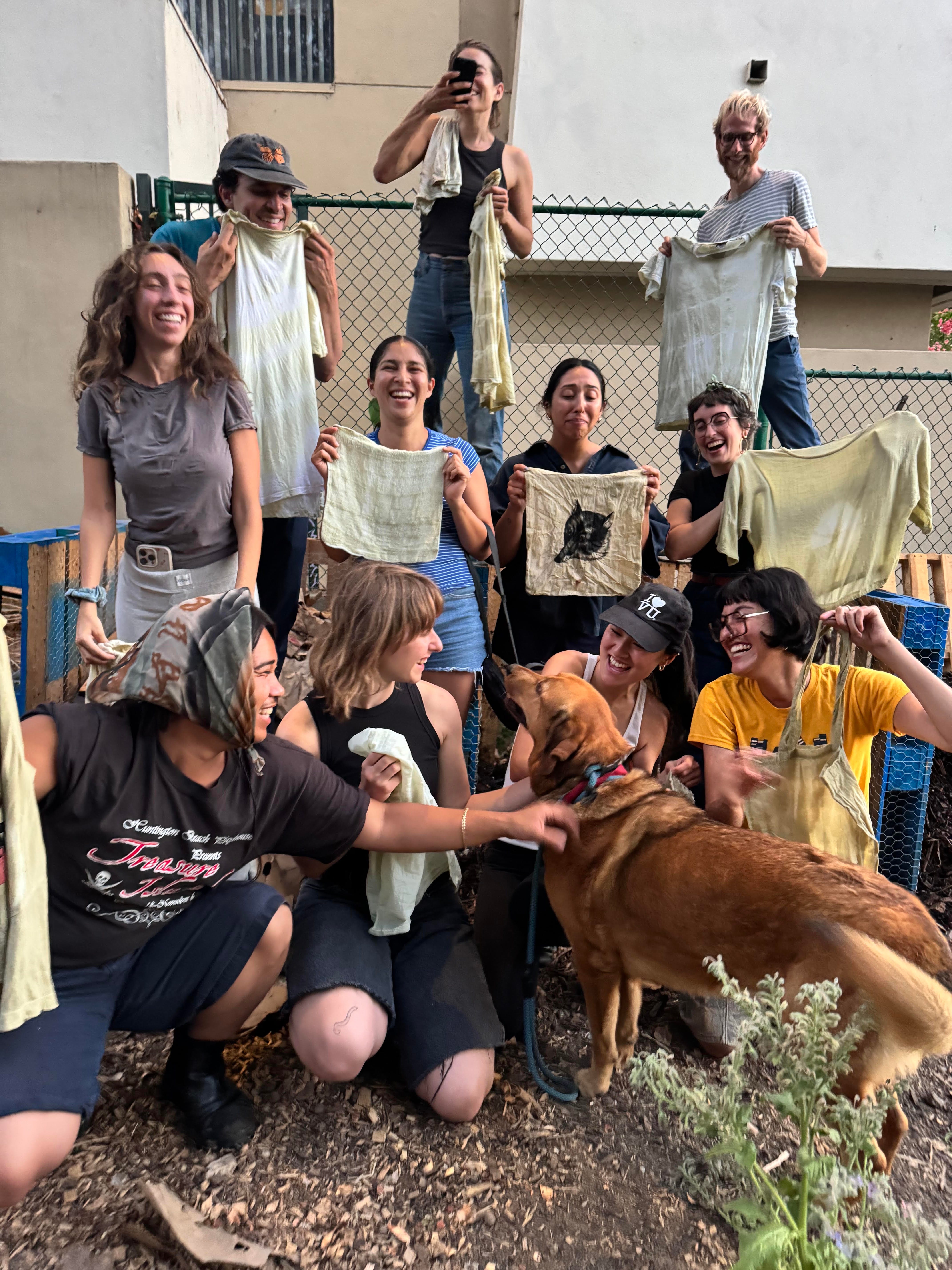
The wonderful Miranda Bennett has been using my tutorial on composting clothing to try and “design” some dresses using microbes. You can follow her progress and reflections through her Substack and Instagram. Both are extremely moving and worth it!
The writer Tove Danovich wrote a glowing reflection on my book as part of her own composting journey. She is SUCH an excellent writer, journalist, and author of the compulsively readable “Under the Henfluence.” A must-read!
Last, but not least, thank you to all who participated in this summer’s giveaway! I loved getting your comments and questions. Winners were selected and books mailed out. If you never received yours, please let me know! Love you.


It’s currently Climate Week in New York City.
I am not there, but this year — I actually wish that I was. I don’t think many people realize that the reason I got into compost work was for climate. In fact, I think people routinely do not realize that “compost” and climate are related at all. But they absolutely are.
That’s because our garbage is a gigantic source of very problematic, planet-warming emissions. Our current system of disposal — primarily, trucking things out to giant holes in the ground and dumping them there — doesn’t work. Landfills leak chemical leachate, and destroy natural habitat. They also release voluminous quantities of a potent greenhouse gas called methane. In fact, America’s landfills are the country’s third-largest source of methane, and satellite and aerial surveys have shown that they emit well above what they report to the EPA.
That methane is produced from organic material, e.g. our food waste and yard trimmings, breaking down in those landfills, without access to oxygen. Recently, in context of one of the various terrifying reports on climate that seem to be released annually, UNEP’s Executive Director Inger Andersen identified removing methane emissions as one of the most high-impact wins for climate: “Cutting methane is the strongest lever we have to slow climate change over the next 25 years,” she wrote. “…the benefits to society, economies, and the environmental are numerous and far outweigh the cost.”
Hence, I compost.
Compost work is a form of direct action on climate. If you compost at home, in your community, alone or with friends, you are doing some critical direct action work on climate, too. In a world full of overwhelmingly bad news, and where so much of climate action can feel subtractive (“Don’t buy this” “Don’t do that”), compost is a positive and generative action you can take. Something you can add to your life, that doesn’t have to cost a thing, and that has a genuinely positive impact.
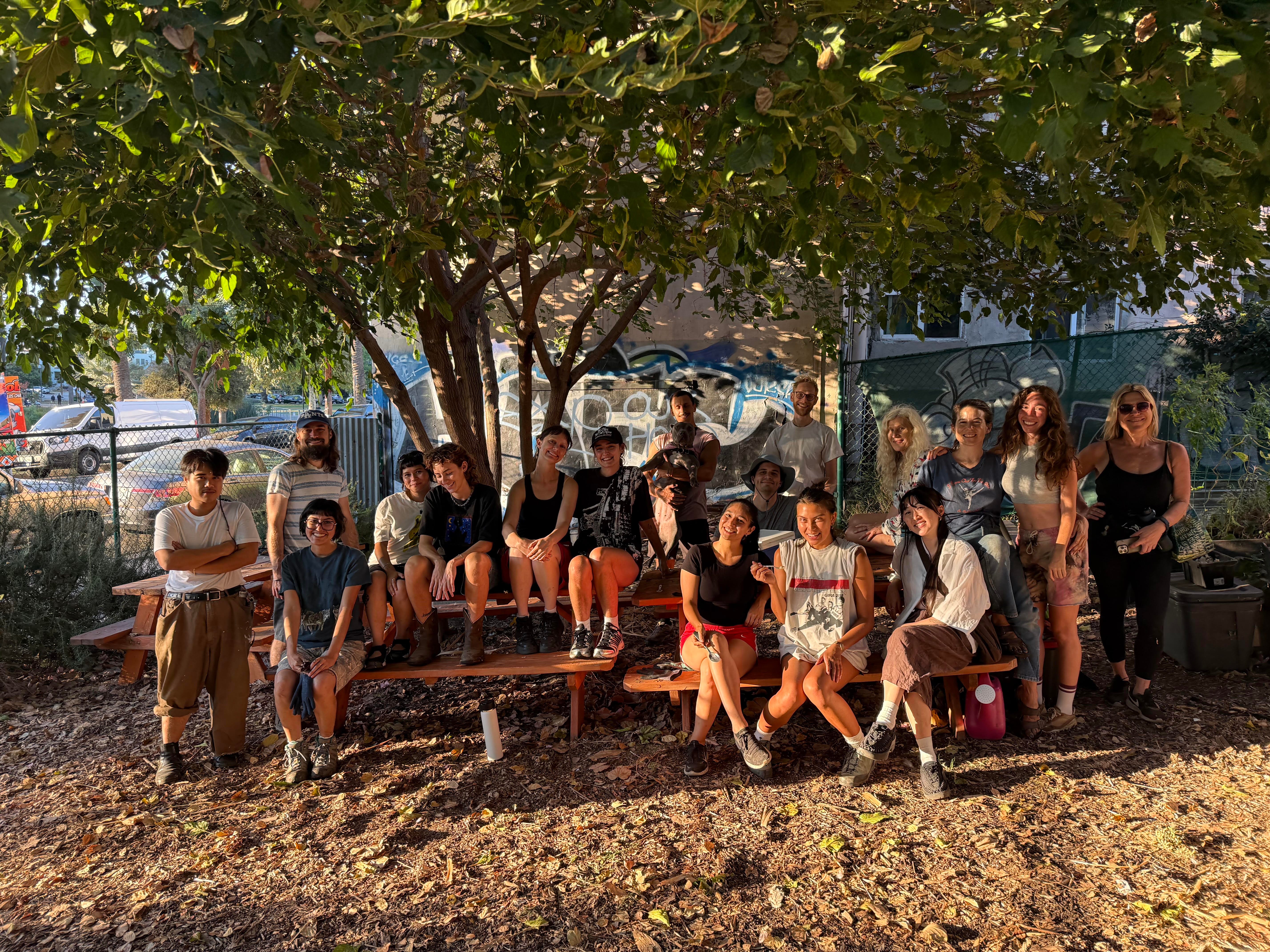
Anyway, here is the volunteer crew after a recent shift at our community compost in Echo Park. Climate work is collective work, as well. That is the part most worth remembering.
Ask Cass: Your Reader Questions on Compost ANSWERED!
Q: How do I know when my compost is ready for the garden?? <3 <3 <3 :) — Amanda
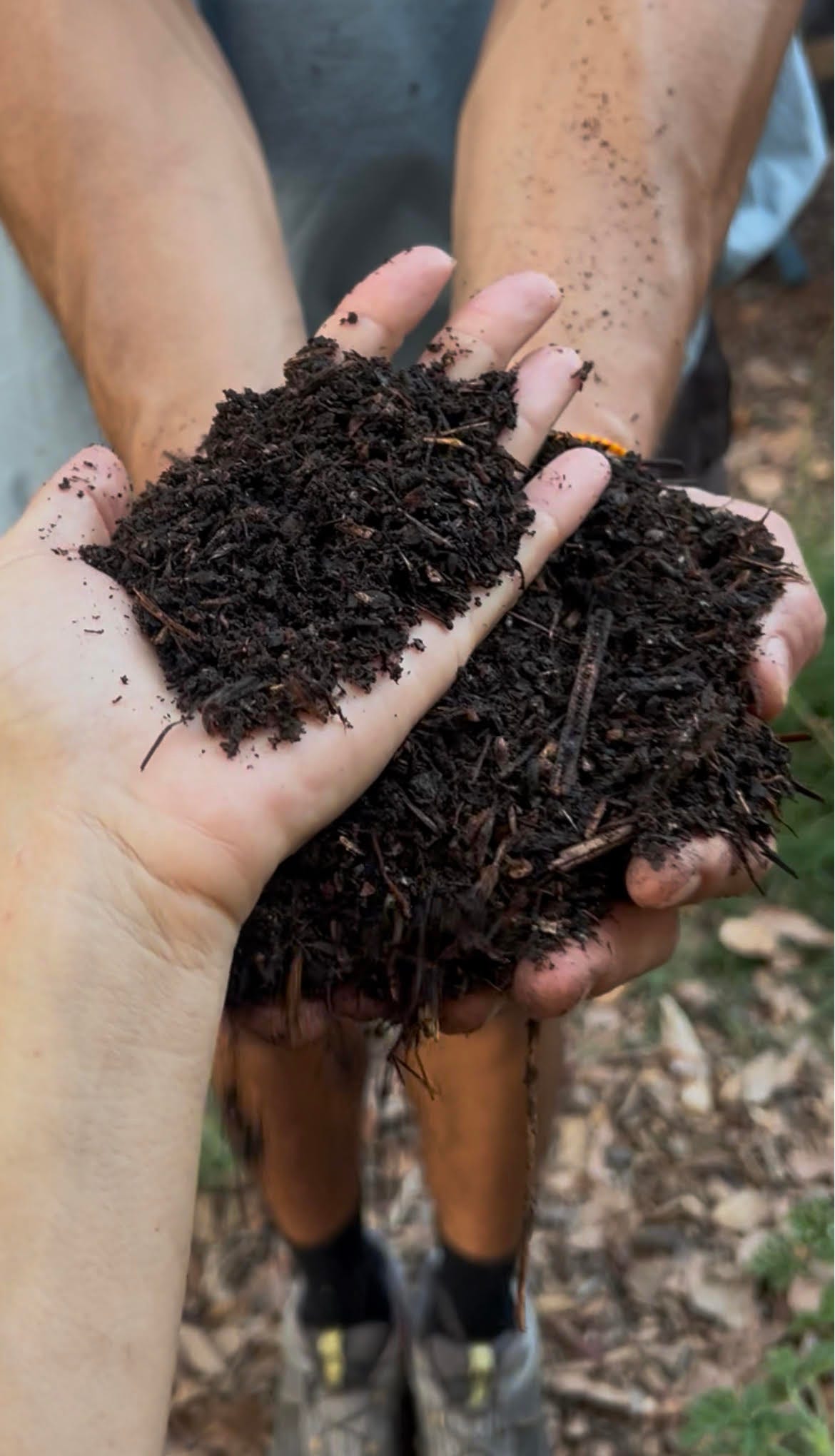
A: I love this question. Nothing is more fun to me than assessing a pile of compost to determine if its ready to use, because it requires use of all your senses. This is a set of questions and observations I put together as a light framework for people to use to know whether or not your compost is ready!
First, what do you see?
The compost should be dark and crumbly, a lot like soil. Put your hand into your pile and sift it through your fingers. If there are still patches of slime or visible and “undigested” food scraps, your compost isn’t ready yet. Let it keep sitting. If you have bulky twigs or wood chips remaining, though, that’s fine. They can be sifted out before use, or simply applied alongside your compost (which is what I do). What you really want to avoid is putting any un-decomposed food directly onto your plants. Everything else is pretty much fine.
What do you smell?
Compost that is ready to be used smells like fresh, good earth. It’s not an odor you have to strive to perceive. Once my friend Vivian came over and stepped onto my back porch, just as—unbeknownst to her—I opened up my pile for turning. “What smells so amazing?!?” she screamed. The odor of fresh earth had immediately and vibrantly permeated the surrounding air. If you’re gun-shy, though, you can always deploy the “bag test.” Take a handful of your compost from the interior of your pile, moisten it, and seal it within a plastic bag. Leave it there for five days. When you open the bag again, you should smell only fresh earth. If you catch a whiff of ammonia, or anything else unpleasant, that indicates that your pile is not finished decomposing. Honestly, though, I discourage the bag test. It takes forever and I believe in cultivating a direct relationship with the state of your pile. Trust yourself.
What do you feel?
The pile should be cool. If it is still warm to the touch, that means that decomposition is still active, and your compost is not yet ready to use. Give it a little more time!
In conclusion
Your description of knowing when your compost is ready to use made all my senses come alive. I have experienced all that you described. The feel of it, the smell and to know how it will enrich your soil. It is so rewarding to compost. You go above and beyond ‘simple’ composting. I commend you and love learning even more from you. I also highly recommend your book, “Compost After Reading” if you truly want to learn everything about compost. Excellent read.
I have question that's been nagging me for a while: Does composting itself emit any toxic or harmful gases? As an aside: I split my time between Colorado and Belize. Composting in Colorado has always been a challenge since it's so bloody dry here. Not so in Belize, where I can have ready-to-use compost in just a few weeks!