Microbes at work
It's the little things in life and decay, plus some other little updates

I spend a lot of time focused on the big picture of compost, and sometimes forget that the whole point of it is the little things. That is, the microbes! Every once in awhile, the community compost where I volunteer gets a little too much food to process at once, and we have to make use of the green bins connected to the neighboring church. Over Thanksgiving, that included dumping about 500 pounds of cubed butternut squash into one of those characteristically green receptacles.
See here:
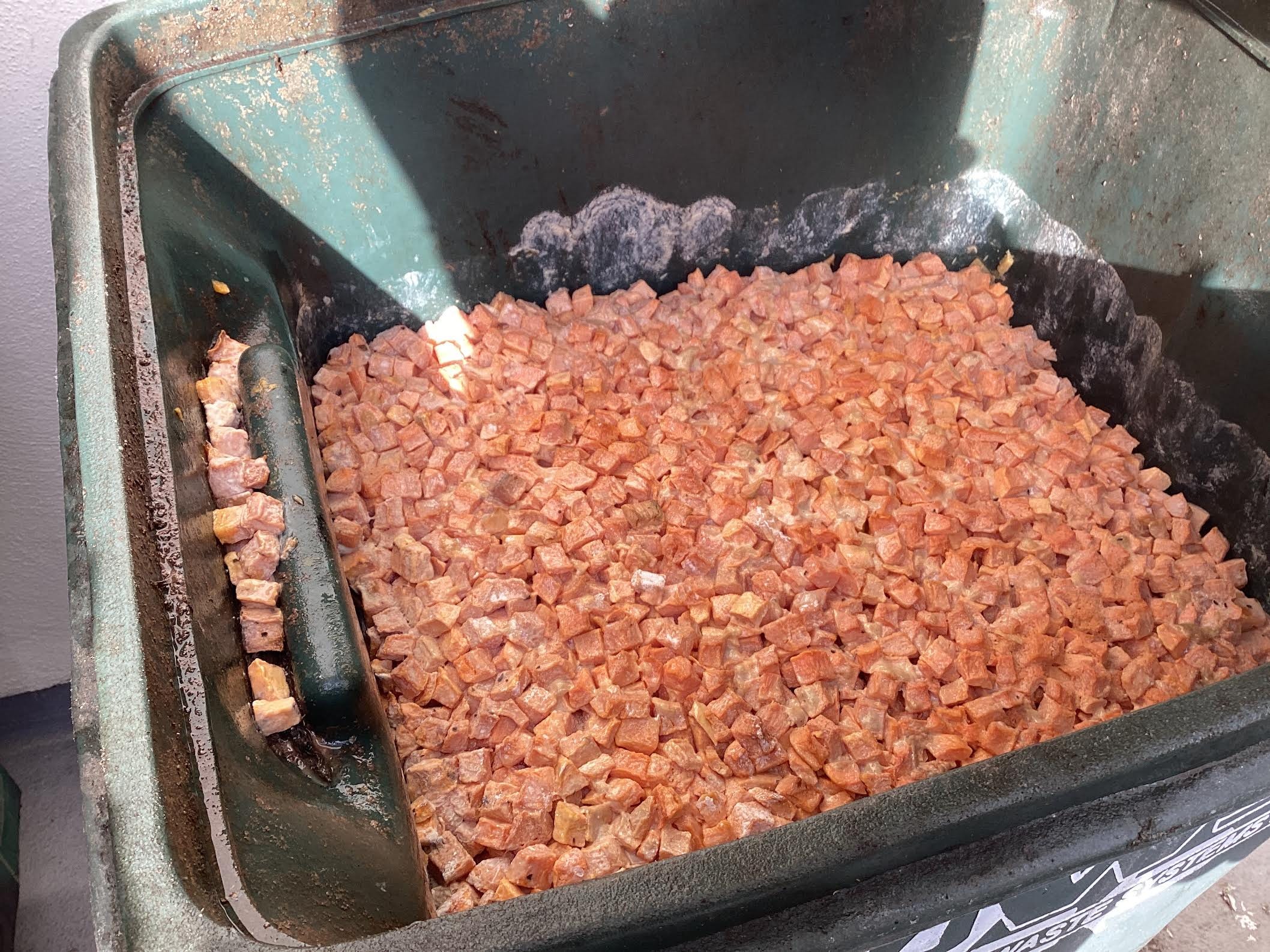
The next week, blithely adding some additional material revealed that the cubed butternut squash seemed to have been entirely replaced with a sturdy, pale orange foam.
See here:
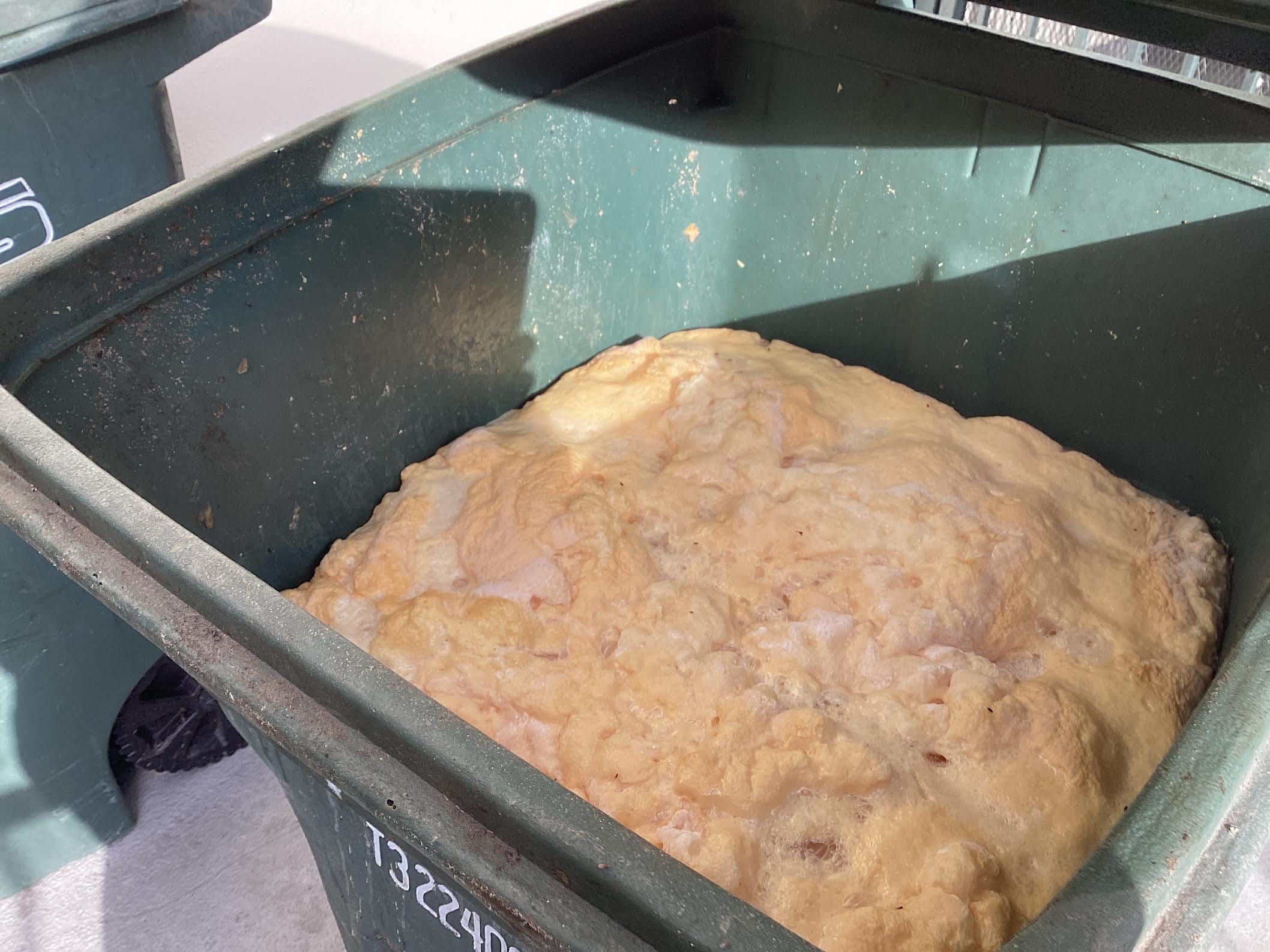
What exactly was this? And why did a bunch of butternut squash piled up in a bin create it?
Butternut squash is sort of famous for its excretions. You’ve probably seen the white, sticky residue that can form quickly along its edges when you’ve cut into a fresh one—you’ve likely even tried to wash it off your hands or jeans, at some point, and found it remarkably difficult. In fact, butternut squash produces such a sticky foam that it was once studied for its viability as a commercial adhesive. (They gave up because it threatened to ruin the expensive lab equipment.) (Lol.)
My best guess as to the situation we encountered in the green bin is the perfection of the microbial environment we had accidentally created. Butternut squash is rich in both sugars and water, an abundant and easy food source for bacteria and other microbes, like yeasts and fungi. As all those microbes began to go to work on all that squash, breaking down those sugars, they would be respiring carbon dioxide. The sheer volume of microbial activity would produce more and more gas, forming more and more bubbles.
However, these bubbles wouldn’t easily “pop” and dissipate—recall that previously observed stickiness—thanks to something called biosurfactants. Biosurfactants are secondary metabolites produced by microbes to help them break stuff down easier. Biosurfactants have a water-loving end and a water-repelling end. They wedge themselves at the boundary between air and water, aka “the bubble,” with the result being that they lower surface tension. That makes it easier for bubbles to form and harder for them to collapse, contributing to the persistent foamy appearance we see above.
Voila.
Microbe magic.
There are, of course, a ton of interesting people out there who are always researching ways to turn the byproducts of decomposition into additional and usable materials for our built environment. Although the above study regarding butternut squash did not pan out, there are at least a few other exciting advancements:
The California-based biotechnology organization Mango Materials have developed a process to turn methane from food waste into biodegradable plastic.
A scientist at the University of Portsmouth has developed a way to make natural soaps and other household products by brewing rice straw with enzymes:
“Dr Rahman said: “Surfactants are everywhere, including detergent, fabric softener, glue insecticides, shampoo, toothpaste, paint, laxatives and make up. Imagine if we could make and manufacture biosurfacants in sufficient quantities to use instead of surfactants, taking the human-made chemical bonds out of these products. This research shows that with the use of agricultural waste such as rice straws, which is in plentiful supply, we are a step closer.”
I’ll let the headline here do the talking: “Bioconcrete” of the future can heal itself.
My friend Claire Evans writes constantly about all the interesting ways scientists are trying to use bacteria to build things. (And mostly failing, but in interesting ways.)
I’m sure there’s lots more!
Other fun holiday “treats”:
I’ve gotten several emails over the last six months asking for the blueprints to a 3-bin system I designed. For some reason, the link on my website keeps breaking. Boo. So here they are again. (If this link doesn’t work, I’ll freak out.)
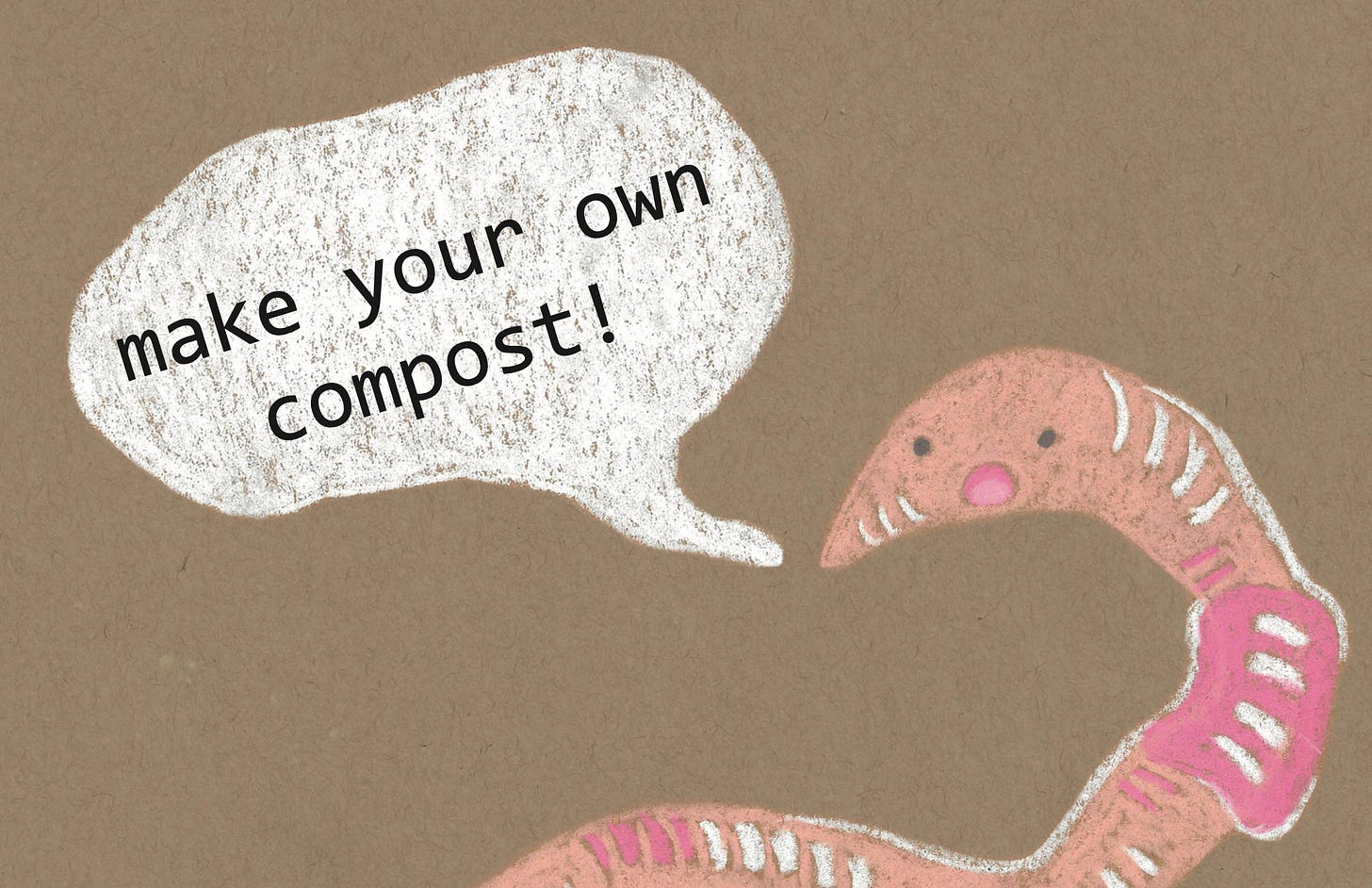
I collaborated with the wonderful Hannah Pae on a simple 1-page pamphlet explaining “how to” make compost for kids. Cover pictured above. The PDF is here, you can download, print, fold it, and share. For free!
I’m co-hosting a holiday party tomorrow with my friend Anthony and Big One Magazine at Taix in Echo Park. Stop through if you’re free.
Happy holidays,
Cass
PS. Are any scientists reading this? If so, let me know if my hypothesis above is correct or completely wrong. :)
Next time you hold a gathering, we'll come down and
stay at your home.
Another great read. Always learn something from your articles. Thank you! Like the pamphlet too... except for one minor detail. Would it be possible to replace the apple core with something else? I have heard that amygdalin in the seeds of apples can kill cancer cells.