You can just dig a hole.
Some thoughts on trench composting and effort.

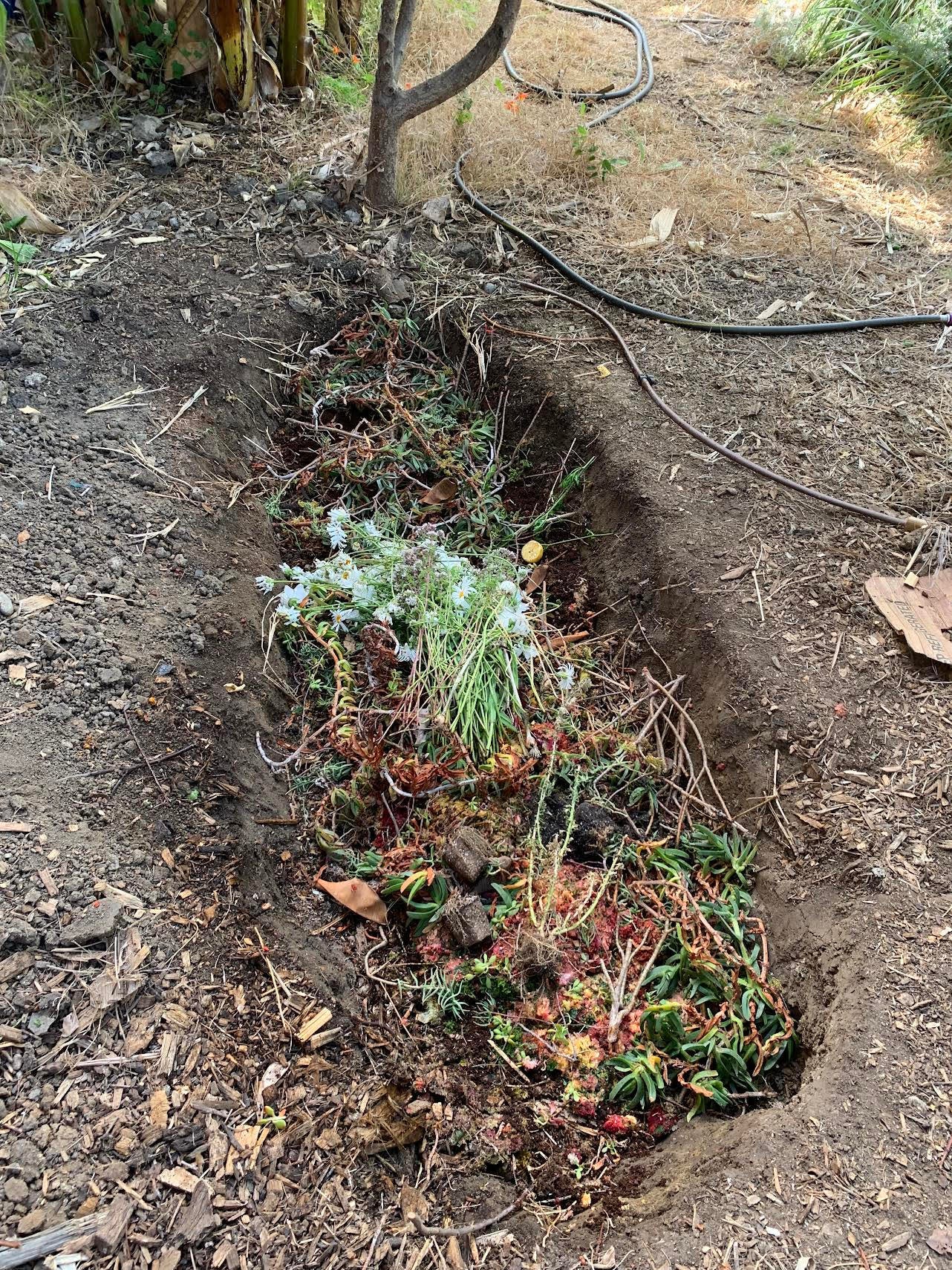
There are six composts at the community garden where I work. We have two three-bin systems, one worm compost, and—as of our last volunteer sessions—three trench composts. What is a trench compost? you might ask, as many reasonable people are inclined to do. Truthfully, I’m always surprised that people can’t tell by the name. A trench compost is exactly what it claims to be: a big trench, in which you compost.
I think people are so used to good things taking hard work, so used to thinking that hard work equates to virtue (and it does in some cases) (but), that it feels like a bit of a trick when I tell them about a trench compost. The idea you can just dig a hole and toss some stuff into it and that “works” can feel a little disorientating, if not occasionally alarming.
But it’s the stone cold truth.
You can simply dig a hole directly into the earth, as big or small as you want, throw in your organic matter, like food scraps or grass clippings, cover it back up again, and move along. The earth will readily compost what you’ve left behind and you, as the composter, are completely off the hook for any further labor or participatory effort. Isn’t that kind of sublime?
Of course, there are some caveats.
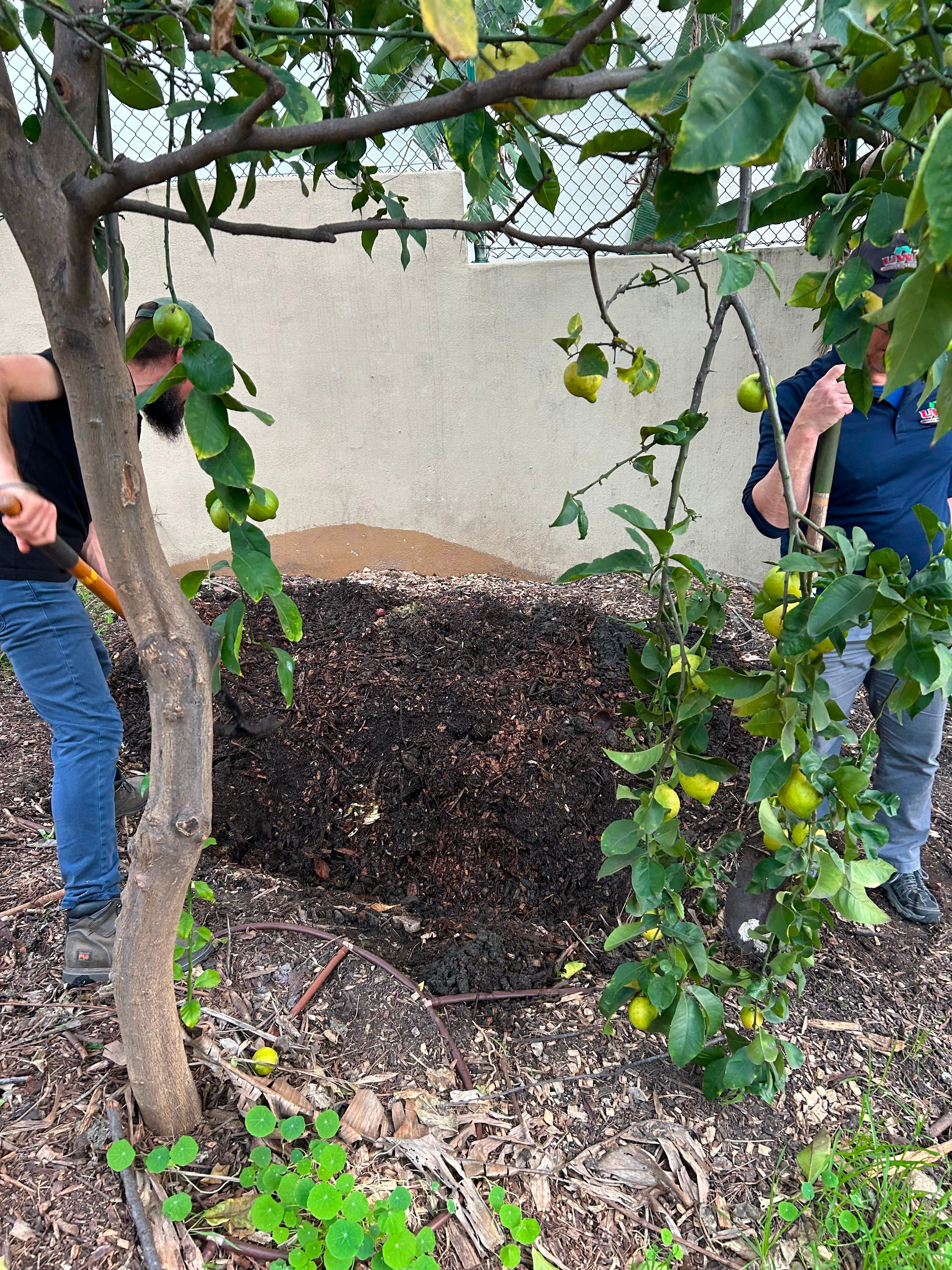
I don’t recommend digging a trench compost near flowers or vegetables you might be growing. The sudden influx of nitrogen is too much for them to handle. Mature shrubs or trees can deal with it slightly better. Still, it’s polite to keep your distance. Try to stay at least three or four feet back, preferably beyond the drip line.
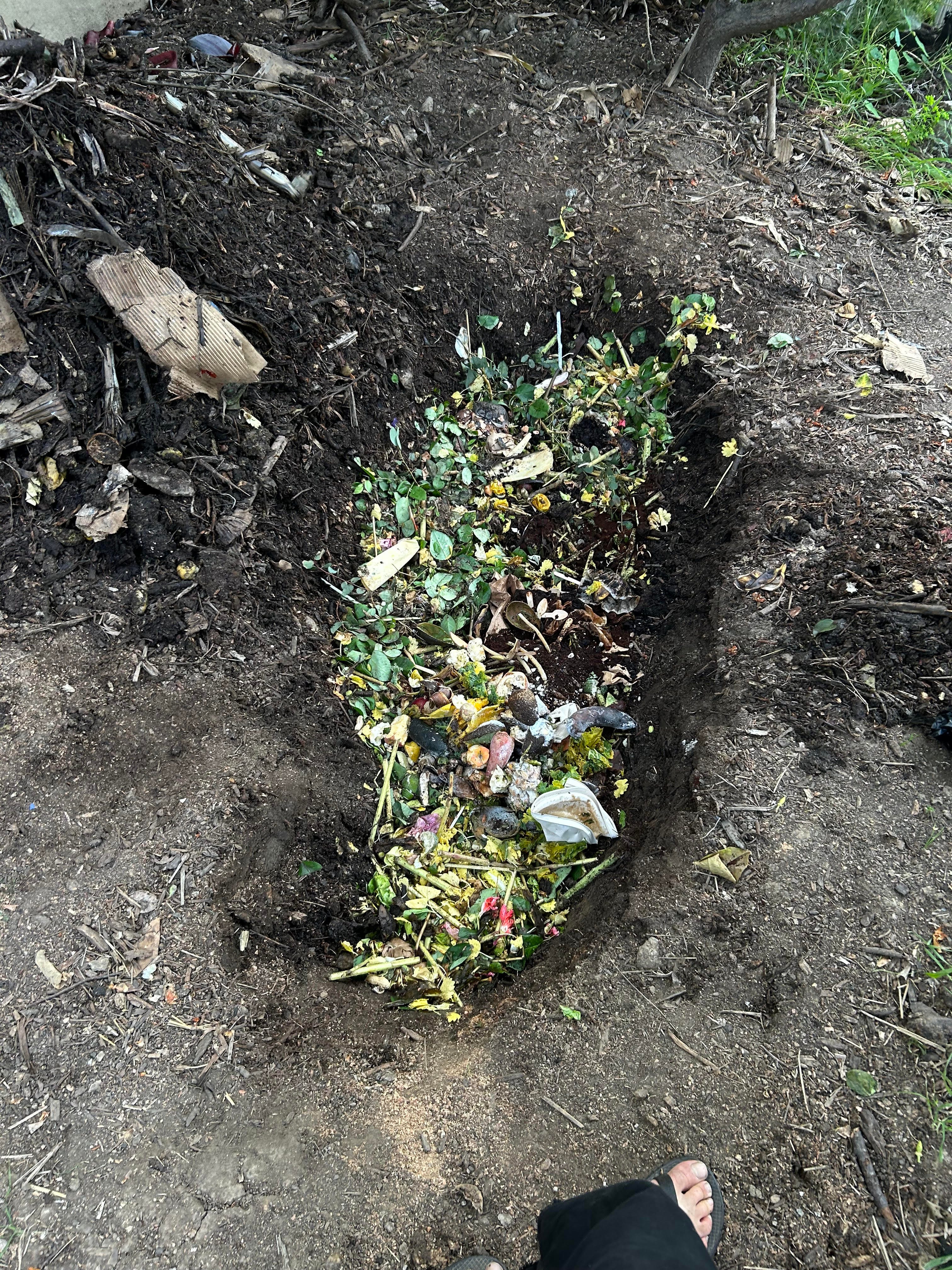
You can treat a trench compost similar to a “regular” compost, if you want, and throw in a nice mix of your high nitrogen materials, like food scraps, and high carbon materials, like wood-y yard waste or cardboard. If helpful: here’s my primer on building any compost. And why you can’t get compost wrong.
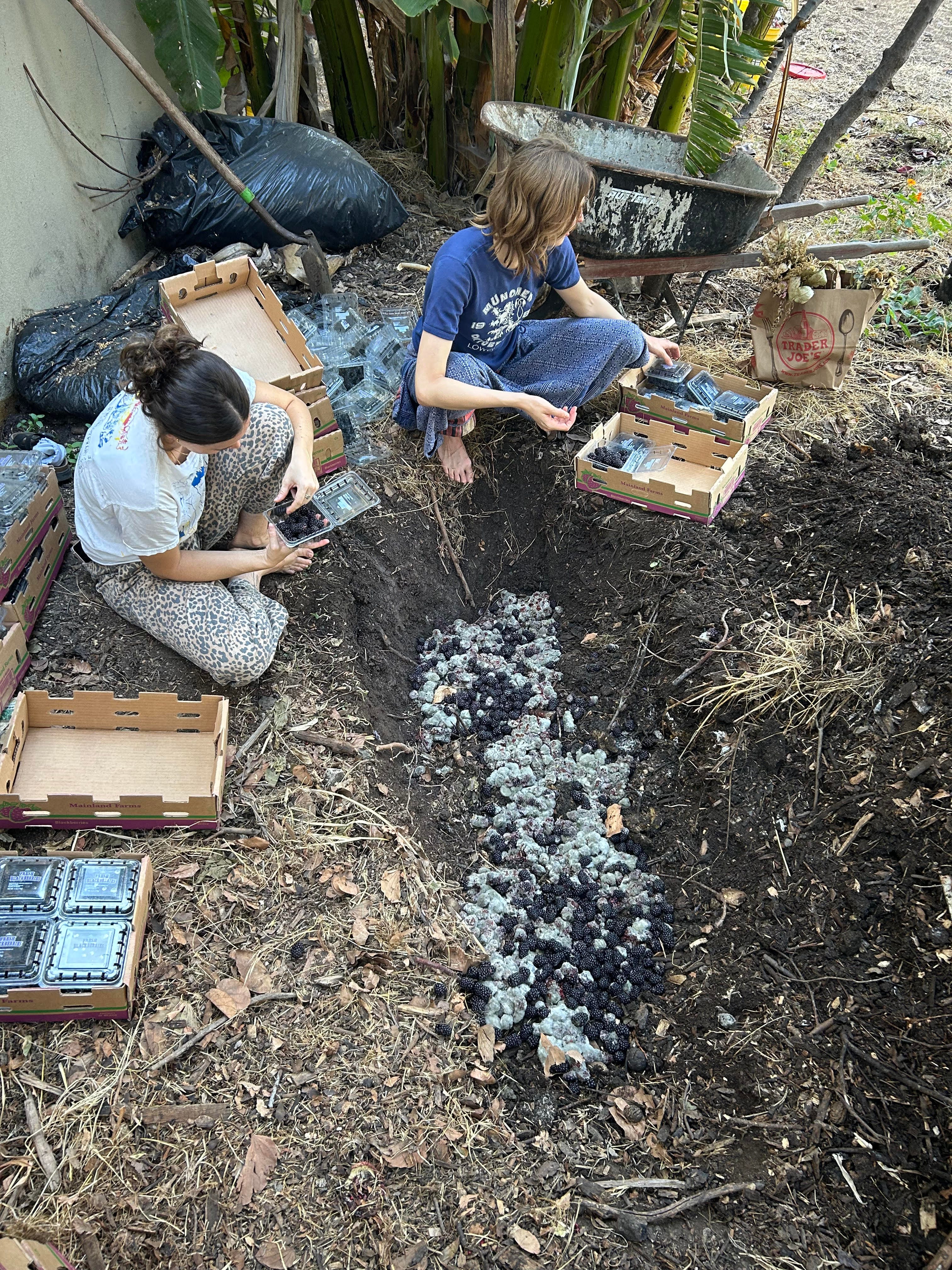
You can “reuse” a trench compost as much as you like, just make sure you’re taking breaks between adding new material, giving the earth time to fully digest one load before putting in another. The oldest trench in my community garden is maybe five by now, and it’s gotten more productive as it’s aged. These days, it can disappear nearly 500 pounds of moldy raspberries in less than a week. Doesn’t that sound made up? And yet.
You can also rotate the location of a trench compost, in order to spread its benefits uniformly across any garden or backyard. Everywhere you bury organic matter, it will work to build essential soil biology and improve the earth. A steady and earnest commitment to this effort could do a tremendous amount to restore depleted soil in your vicinity, if you’re willing to give it a shot.
In the end, the true joy of the trench, for me, is that you truly do not have to think about it. It’s an effortless endeavor, gorgeous and filthy. How many things are so well done, with such little effort? They are few and far between, and worth embracing. And at a time when so many other things are worth your full attention, I say go ahead, here’s permission, let this one thing be easy.
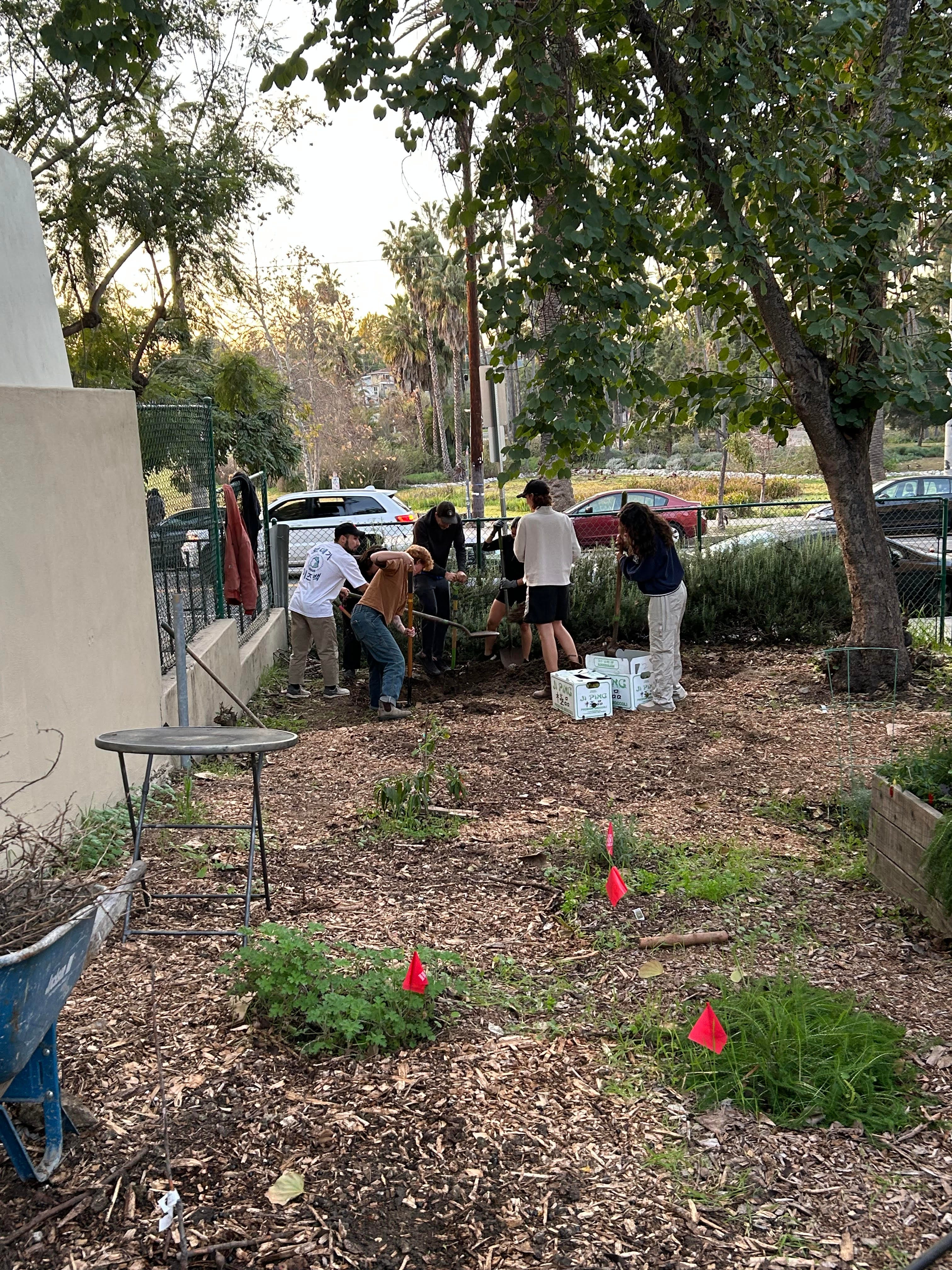
Some trenches I have loved:
This was great to read! I have avoided composting from my veg and flower gardens because it all looked so complicated and science-y. Yuck. One question, will this unprotected trench attract critters? I already have a bit of a problem in the veg garden itself with rabbits, deer, squirrels etc.
best email subject line I've ever received