A new perspective on aphids
Plus: a few reader Qs are Aed

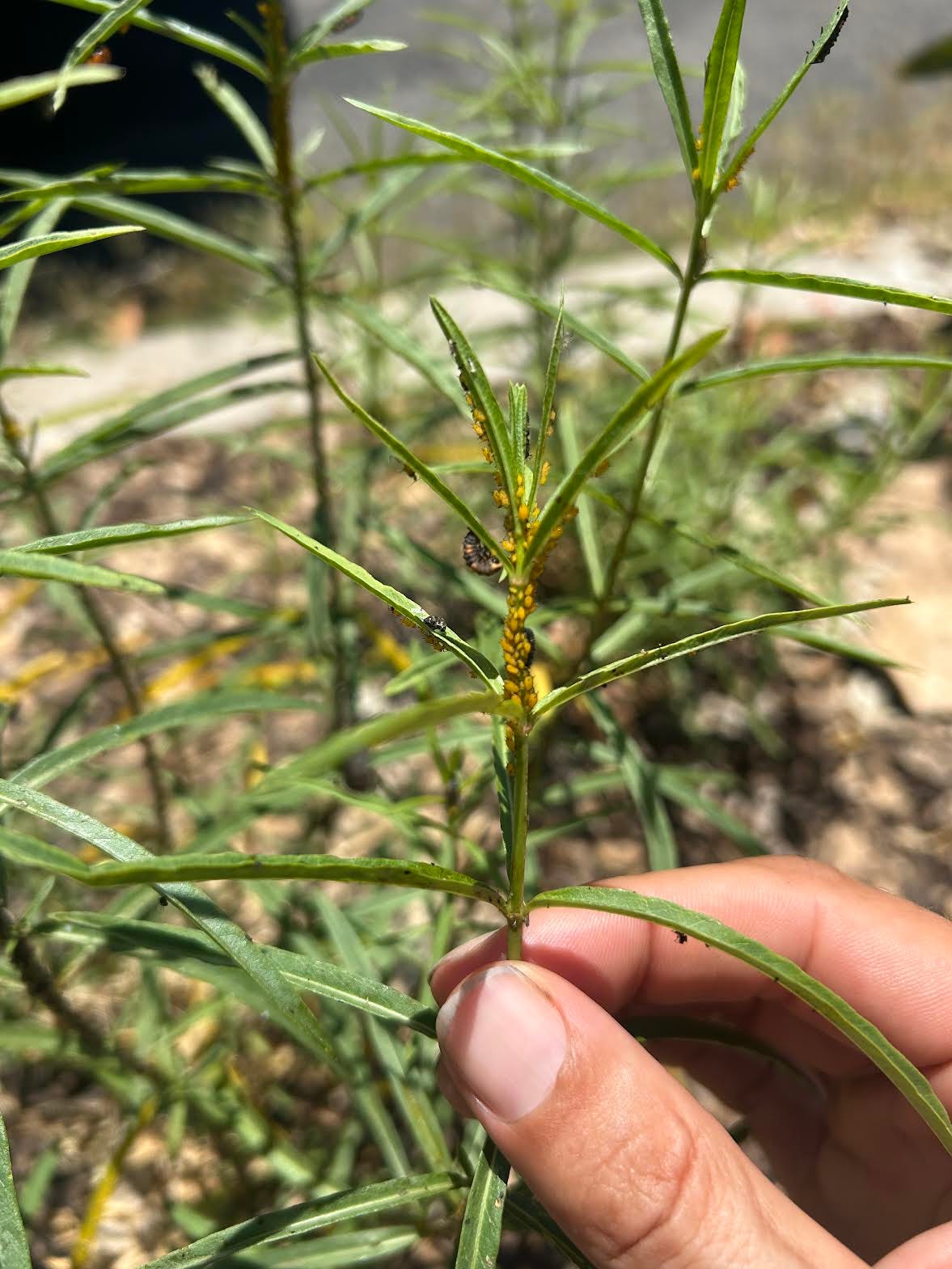
At the beginning of this year, I planted some native milkweed sprouts — barely an inch tall— in the sidewalk divide in front of my home. A few weeks after that, I woke up to discover them covered in little orange blobs of aphid. This was surprisingly upsetting to me. The plants were still very young, and I worried the aphids posed an outsized risk to their health.
I tried every imaginable natural remedy, mostly practical stuff like blasting them with a hose or wiping them off with a paper towel, but they always re-populated quickly. What was I going to do?! I have spent the better part of my life lecturing people that they should NEVER use insecticides or conventional forms of chemical control at home, but now here I was with genuine insomnia worried that my baby milkweed was being unfairly consumed by some alleged pests. It was a humbling moment. Even though I knew my fear was misguided, I had developed a genuine attachment to the health of these plants, and it was hard not to perceive their consumption by aphids as “bad.”
But I grit my teeth and let it go. Day after day, I came out to fewer leaves and more aphids.
Grit, grit, grit.
Then, a few weeks on, I noticed a few lady bugs had appeared —still little droplets of red on the leaves. They were feeding on the aphids. Then I began seeing milkweed bugs and hoverfly larvae. Both also natural predators to aphids. Then came the lady beetle larvae, capable of consuming between 600 - 1,200 aphids per day. The orange blobs rapidly diminished in density. I found my insect anxiety replaced with a brand new excitement to wake up and see what new bugs my aphid-coated plants might have attracted.
My patience, even if reluctant, had gained me a valuable lesson, one that I recognize from my time spent with compost: death begets life. The aphids may have represented a temporary obstacle to my milkweed’s thriving, but their presence had ultimately catalyzed even more and different forms of life. Today, I can count a half dozen different species of insect buzzing around my milkweed plants. More than a few new birds, as well. Very few aphids remain. The plants are exhibiting fresh growth.
Aphids, I now know, are a foundational part of our food web. Literally hundreds of species, including dozens more types of insects and various birds, count on them as a primary food source. Not only are these guys not a particular threat to me, even if they are feeding on my plants, they happen to be one of the most ecologically important insects in the world— an excellent use of milkweed if there ever was one. But I also recognize now that when I’ve told people to “just not use” insecticides, it can sometimes be a more challenging proposition than I realized.
Such is (death) life.
Ask Cass: Your Reader Questions on Compost ANSWERED!
Q: What are your feelings about building a compost bin with wooden pallets? Good idea? Bad idea?
My verdict: great idea. In general, I love building compost bins from whatever materials you have on hand, and wooden pallets — if you have access to them — are a particularly great option. Go for it!
The wariness about wooden pallets from some folks likely stems from the reality that, prior to 2005, many of them were treated with a heavy-duty agricultural chemical called methyl bromide, which was used to kill potentially invasive insects during international shipping. Today, the use of this chemical is extremely restricted and finding a pallet that has been treated with it would be a rare occurrence. Instead, most wooden pallets receive “heat treatment,” which is a chemical-free alternative.
If a wooden pallet has been treated, you’ll see it marked with an “MB” stamp. Definitely do not use one of those pallets. (You probably don’t even want to touch one of these pallets, yech.)
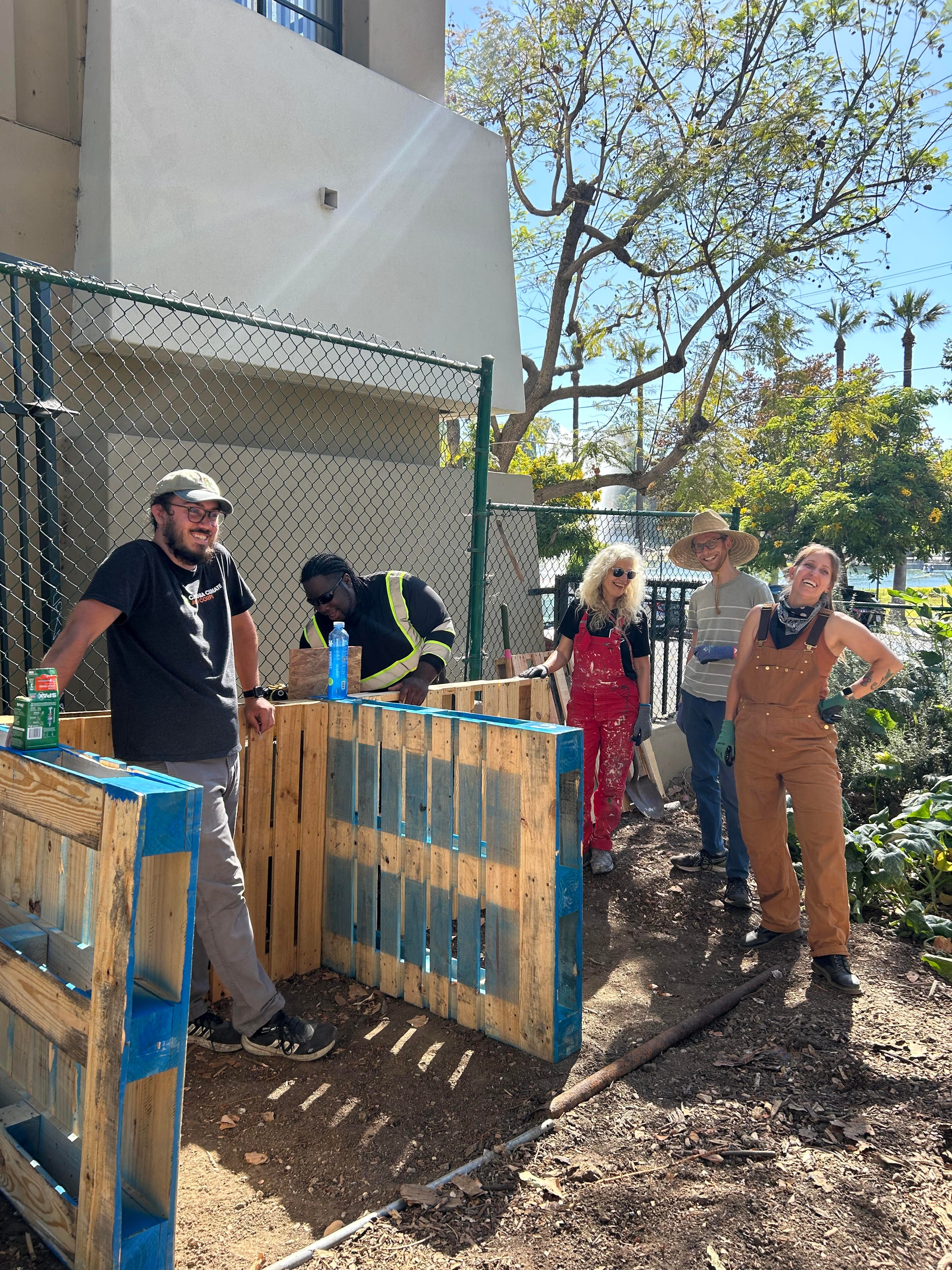
If you’re wary, regardless, you can always line the inside of the bin with burlap sacks or some other natural material, of course. Although I don’t see a reason to be worried. We recently built a new set of bins at the community garden from some discarded pallets (pictured above), and they are working great for us.
Q: Do you have a quick thought on the Mill “compost”? Yay or nay if you’re just gonna use compost anyway for your home garden bed?
I get this question a lot, as you can imagine. People ask me about the Mill, but also about Lomi, FoodCycler, and other electric “compost” devices. People’s interest in them seems to generally stem from a pretty fundamental misunderstanding about what they are. These devices do not make actual compost, nor do they make — as Lomi originally claimed in their marketing — “soil.” Mill, Lomi, and all the others, are just expensive ways to grind and dehydrate your food scraps. That material would still need to be added to a compost in order to actually become compost.
Okay, you might wonder, so then what is the point of them?
Theoretically, these devices are meant to make it easier and cleaner to deal with your food waste. Compostable bags are “messy” and food scraps are “stinky.” Sure. Those things could be true, but these devices are still really expensive ($800 for a Mill, $500 for a Lomi) for only being partial solutions. The material they generate still needs to be composted in order to become compost. You still need to find something to do with it.
Personally, I never recovered from my distaste of Lomi after they were willing to just outright lie in their initial marketing campaigns. Why would I ever want to support a company willing to do that? But I’ve always given Mill some bonus points for being, at least, honest in their marketing from day one, and for actually trying to come up with a plan to dispose of what their bins create in a way that is defensibly carbon-friendly. (They will let you ship them back, where they are then sold to farmers as chicken feed.)
In the end: For some people, an expensive device to make storing food scraps less smelly is extremely worth it. No judgement from me. But I think for most people, what is actually being offered here is not the solution they are really hoping for. For your time and effort, you’re better off building and managing your own pile, or —if you don’t have one of those— walking your food scraps to a community compost drop off.
Have a question? Respond directly to this email - always happy to chat. :)
Compost After Reading
Love your posts!
Question: Our local compost would rather not put eggshells into the collection, because they decompose so slowly!? Do you have an opinion on this?
Thanks for this different perspective. I’m always quick to get majorly upset when they swarm in but I’ll think of this next time!